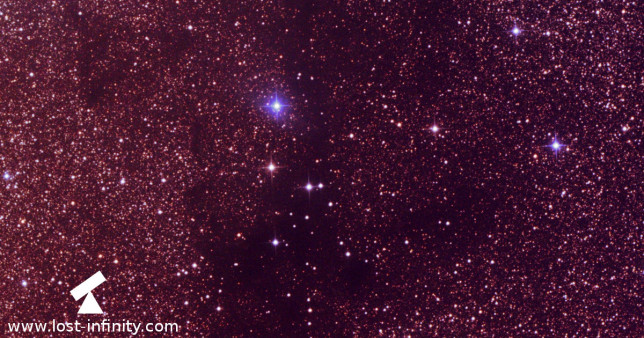
Imaging the black claw of Vulpecula – vdB126

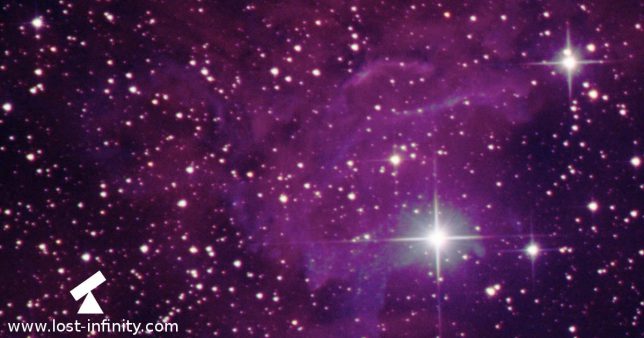
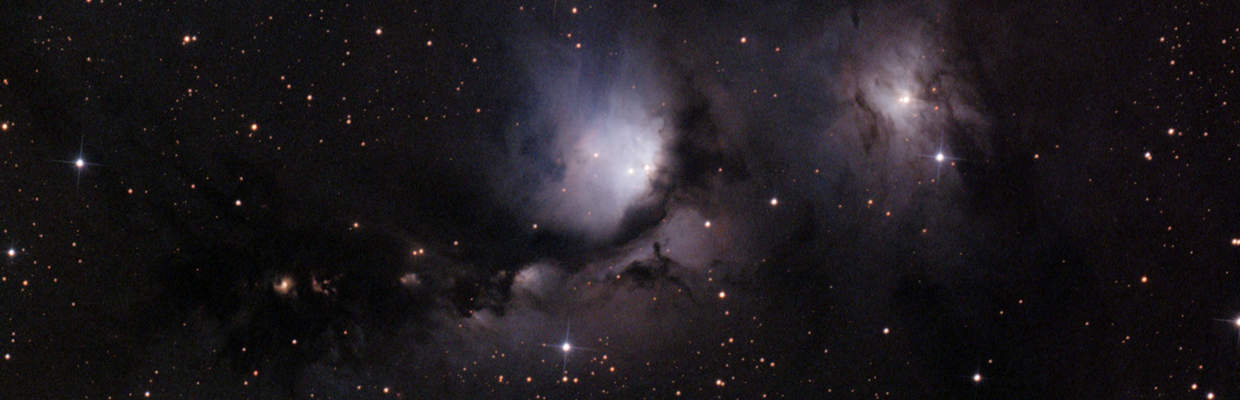
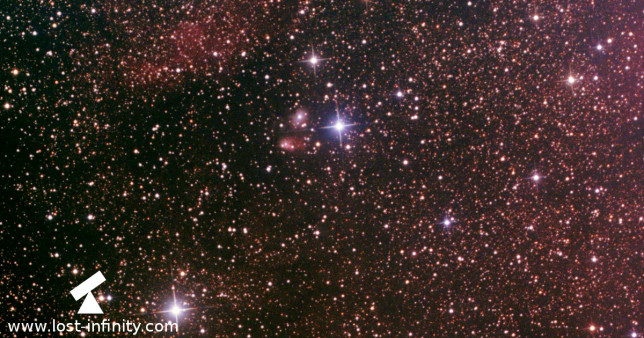
vdB 126 is a reflection nebula in constellation Vulpecula. To me it looks like a black claw with at least 4 fingers.

I like the many stars in this region! In this clear night I was able to get 8 good IR frames before the moon rose. For stacking I used DeepSkyStacker 3.3.2 with Kappa-Sigma Clipping. The picture is also available in full resolution here. Finally, I decided to put it into my My Top Astro-Pics gallery.

Date2015/07/08
LocationBöblingen / Germany
ObjectvdB126 (Reflection nebula)
CameraAtik383L+
Guidingyes, QHY5-II Mono via OAG
Telescope8
Barlow lensnone
MountEQ6Syntrek
Cooling-15°C
Luminance8x, 600s, bin: 1x1
Red7x, 150s, bin: 2x2
Green7x, 150s, bin: 2x2
Blue7x, 150s, bin: 2x2
Dark10x
Flat10x
Total exposure~2h12min.

Clear skies!

Last updated: June 16, 2022 at 23:33 pm
Astrohotography of Sh2-88 without H-alpha filter from Böblingen / Germany

The evening of 24th June 2015 was a warm and nice summer evening. All the clouds vanished and the forecast predicted a clear night 🙂 Since I didn’t image a nebula for quite some time I decided to image one this night. Recently I came across Sh2-88 which is an HII emission nebula in constellation Vulpecula. So this should have been the target for tonight!

I saw some great pictures of Sh2-88 before which have been taken using an H-alpha filter. Since I am not yet having an H-alpha filter I just decided to give it a try without H-alpha. Of course the nebula structures don’t come out as good as when using a such a filter. But I am still satisfied for a picture with just 5 IR frames. The seeing with my f/5 GSO Newton (F=1000mm) was around 2.1″ – so quite good for this region.

Date2015/06/24
LocationBöblingen / Germany
ObjectSh2-88 (Emission nebula)
CameraAtik383L+
Guidingyes, QHY5-II Mono via OAG
Telescope8" GSO Newtonian
Barlow lensnone
MountEQ6Syntrek
Cooling-15°C
Luminance5x, 600s, bin: 1x1
Red5x, 150s, bin: 2x2
Green5x, 150s, bin: 2x2
Blue5x, 150s, bin: 2x2
Dark3x
Flat10x
Total exposure~1h27min.

Clear skies!

Last updated: June 17, 2022 at 6:58 am

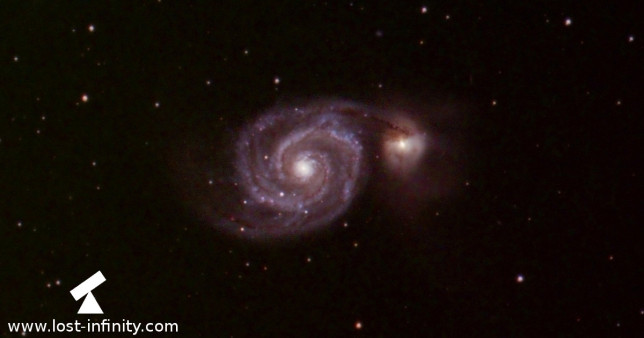
Imaging the Whirlpool Galaxy (M51)

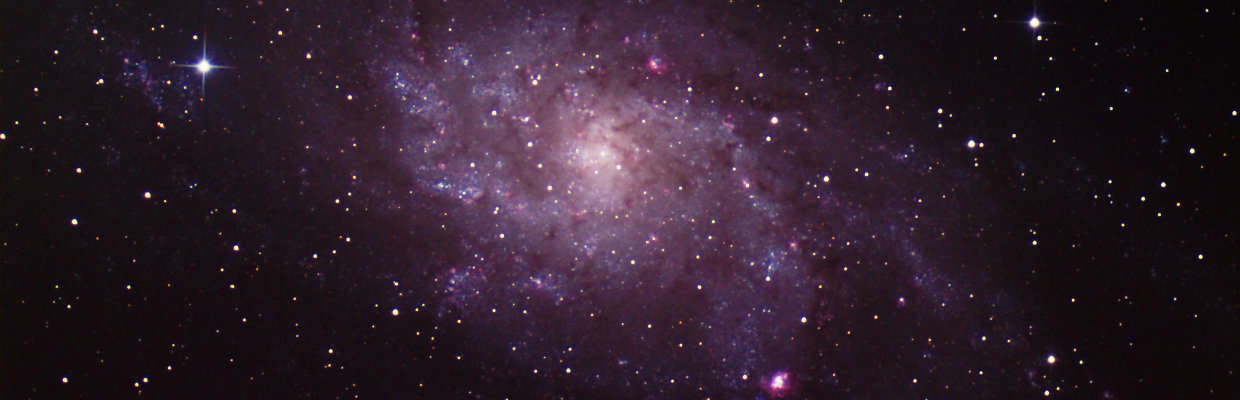
Today, after a long long cycling tour the weather forecast made me smile 🙂 There was a good chance that most of the clouds will go away between 23:00 and 2:00. Since the moon is going to rise at 2:11am there is a short but sufficient window to do some CCD imaging. Since I only have free view to the south from home, the position of M51 is a quite good compromise. The seeing with my f/5 GSO Newton (F=1000mm) is around 2.7″ – so this is more or less average.

Date2015/05/10
LocationBöblingen / Germany
ObjectWhirlpool Galaxy (M51)
CameraAtik383L+
Guidingyes, QHY5-II Mono via OAG
Telescope8
Barlow lensnone
MountEQ6Syntrek
Cooling-15°C
Luminance6x, 600s, bin: 1x1
Red5x, 150s, bin: 2x2
Green5x, 150s, bin: 2x2
Blue5x, 150s, bin: 2x2
Dark5x
Flat10x
Total exposure~1h40min.

Clear skies!

Last updated: June 17, 2022 at 14:20 pm

The Flaming Star Nebula (IC405)

The Flaming Star nebula (IC405) is an emission and a reflection nebula in constellation Auriga. The nebula is approximately 1500 ly. away from earth. The final image is a combination of 37 different frames with an overall exposure time of almost 4 hours (including dark frames).

The image also available in full resolution.

Date2015/02/12
LocationBöblingen / Germany
ObjectFlaming Star Nebula (IC405)
CameraAtik383L+
Guidingyes, DMK31AU03.AS via OAG
Telescope8" GSO Newtonian
Barlow lensnone
MountEQ6Syntrek
Cooling-15°C
Luminance6x 600s, bin: 1x1
Red5x 300s, bin: 2x2
Green5x 300s, bin: 2x2
Blue5x 300s, bin: 2x2
Dark6x
Flat10x
Total exposure~2h15m

Clear skies!

Last updated: June 19, 2022 at 22:22 pm