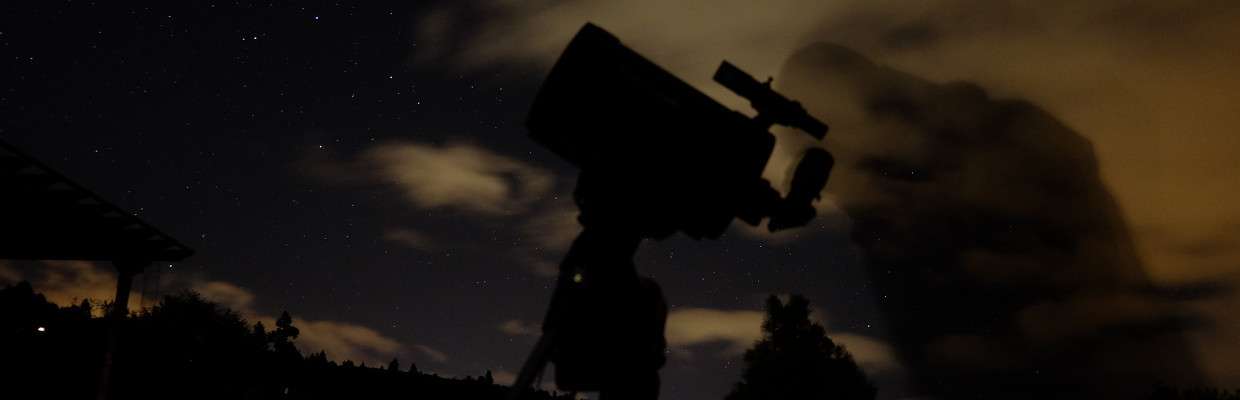
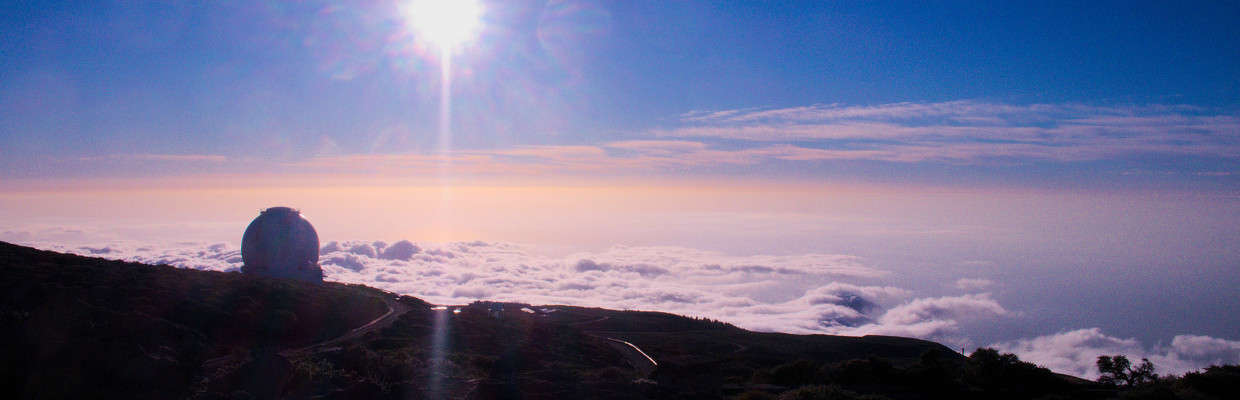
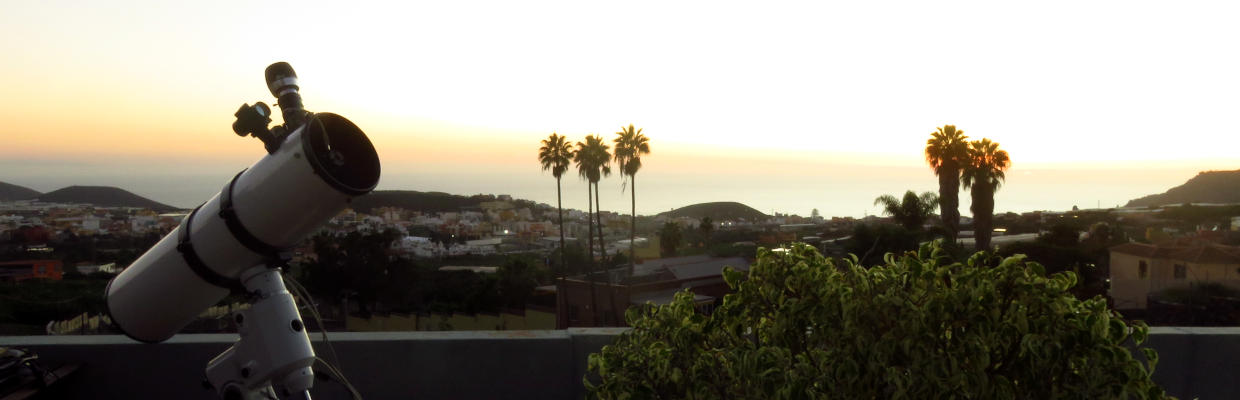
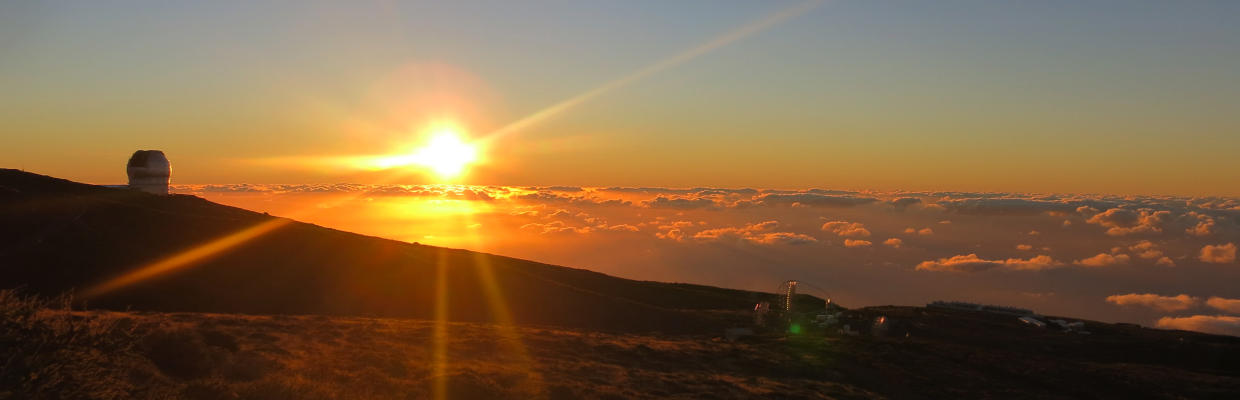
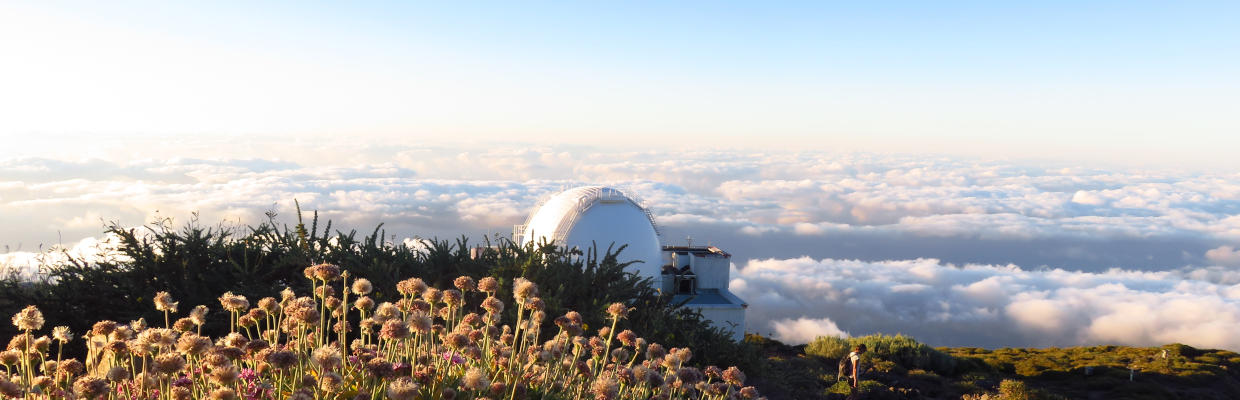
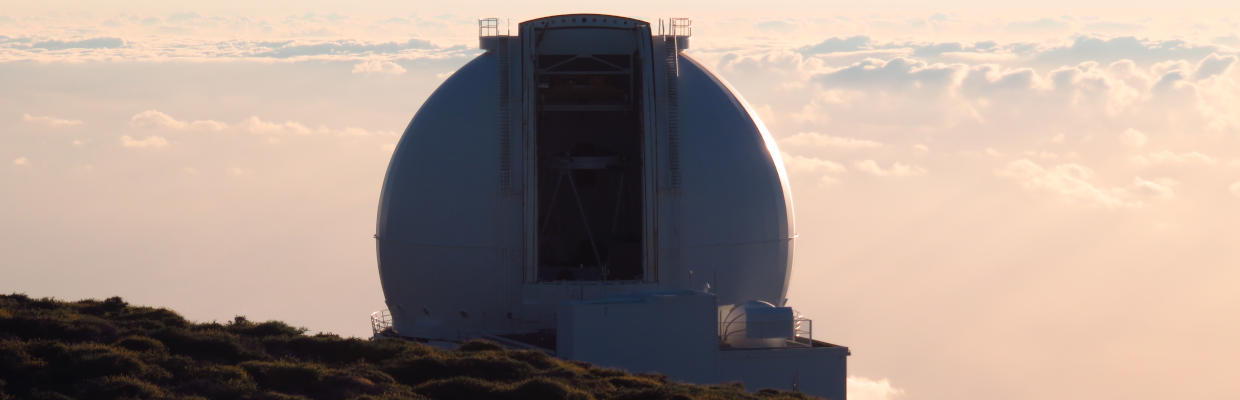
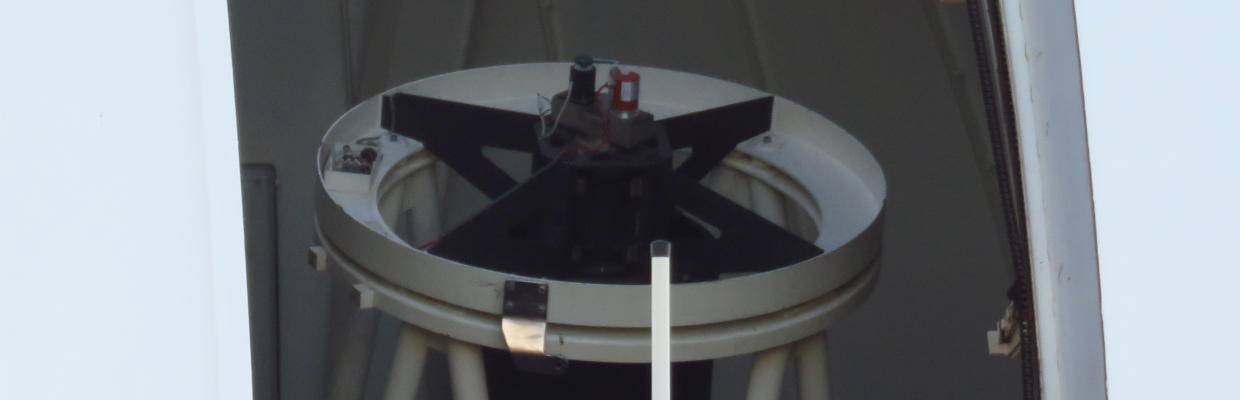
Sunset time-lapse through my 8″ f/5 GSO Newton Telescope

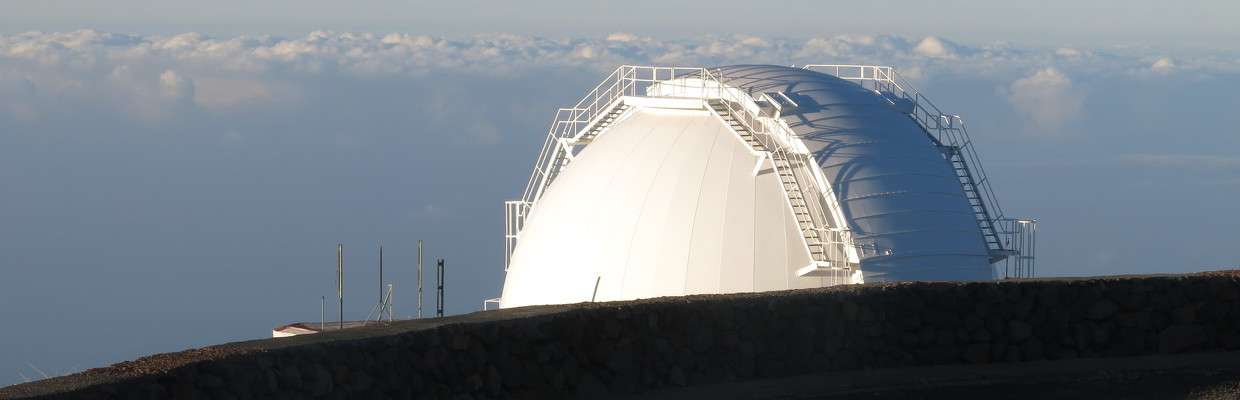
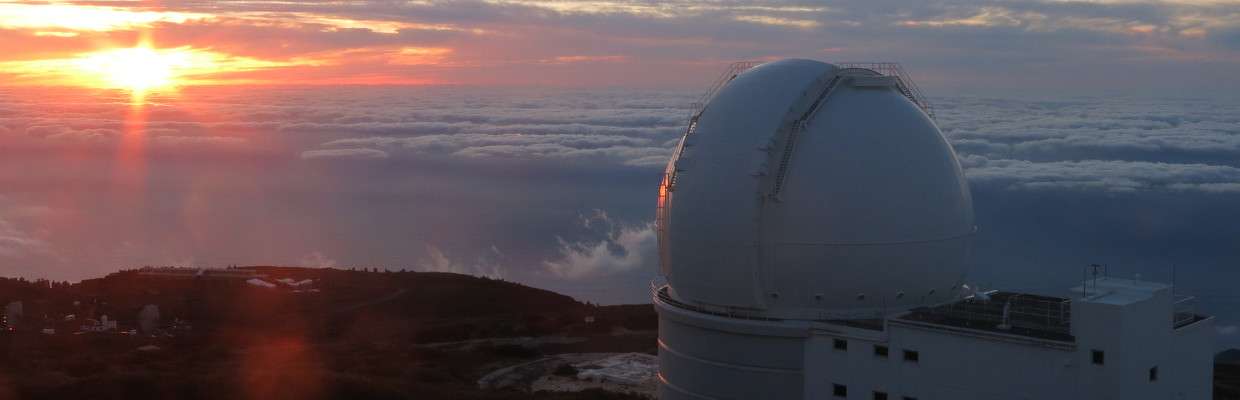
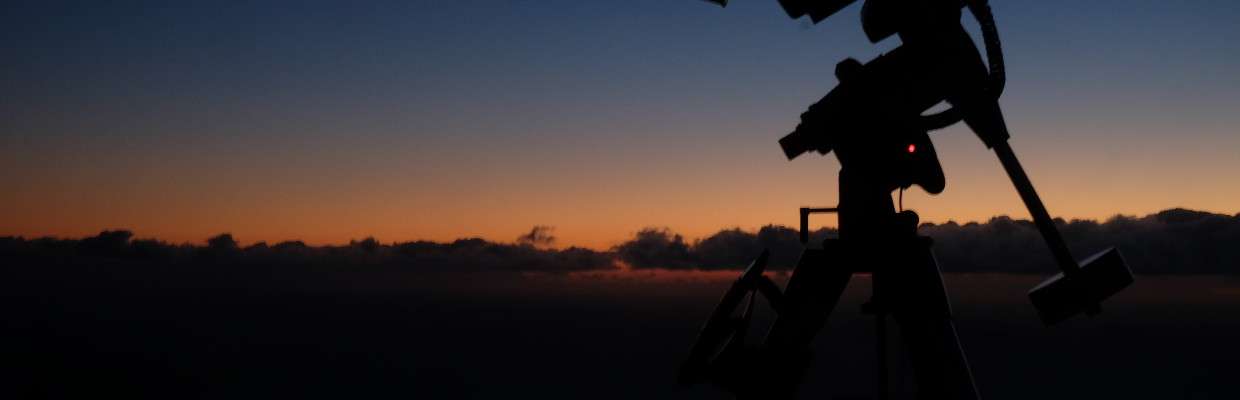
For the first time I tried to record a short time-lapse of the sunset through my 8″ GSO Newton telescope using my Fujifilm X-T1 camera. Not very exciting… but still nice to see the sun going down behind the clouds. The telescope was mounted on an EQ6 Syntrek with tracking enabled. In the end I just disabled the tracking mode.

Clear skies!

Last updated: June 19, 2022 at 21:55 pm

Imaging cluster Messier 35 and NGC 2158 from Böblingen / Germany

Messier 35 or M35, also known as NGC 2168, is an open cluster of stars in the west of Gemini (left part of the image). To the right there is another open cluster named NGC 2158. Even if the two open clusters are “close” they are not related – their distance is about 9000 ly.

The image is also available in full resolution here.

Date2015/02/19
LocationBöblingen / Germany
ObjectMessier 35 cluster
CameraAtik383L+
Guidingyes, QHY5-II Mono via OAG
Telescope8" GSO Newtonian
Barlow lensnone
MountEQ6Syntrek
Cooling-15°C
Luminance11x, 600s, bin: 1x1
Red9x, 150s, bin: 2x2
Green9x, 150s, bin: 2x2
Blue9x, 150s, bin: 2x2
Dark5x
Flat10x
Total exposure~2h57min.

NGC 2158 is believed to be ~2 billion years old!

Clear skies!

Last updated: June 19, 2022 at 22:20 pm

The Flaming Star Nebula (IC405)

The Flaming Star nebula (IC405) is an emission and a reflection nebula in constellation Auriga. The nebula is approximately 1500 ly. away from earth. The final image is a combination of 37 different frames with an overall exposure time of almost 4 hours (including dark frames).

The image also available in full resolution.

Date2015/02/12
LocationBöblingen / Germany
ObjectFlaming Star Nebula (IC405)
CameraAtik383L+
Guidingyes, DMK31AU03.AS via OAG
Telescope8" GSO Newtonian
Barlow lensnone
MountEQ6Syntrek
Cooling-15°C
Luminance6x 600s, bin: 1x1
Red5x 300s, bin: 2x2
Green5x 300s, bin: 2x2
Blue5x 300s, bin: 2x2
Dark6x
Flat10x
Total exposure~2h15m

Clear skies!

Last updated: June 19, 2022 at 22:22 pm

Flame Nebula (NGC2024), Alnitak and NGC 2023

The Flame Nebula (NGC2024) is an emission nebula in constellation Orion. Looking at the image you can imagine where the name is coming from. The bright star right to the “flame” is called Alnitak, a hot blue super giant. At the bottom left is another object – the emission and reflection nebula NGC 2023. This is quite “close” to the Horsehead nebula. The blue spot in the center of the image is a reflex caused by the bright star.

The image is also available in full resolution.

Clear skies!

Date2015/02/11
LocationBöblingen / Germany
ObjectFlame Nebula (NGC2024)
CameraAtik383L+
Guidingyes, DMK31AU03.AS via OAG
Telescope8" GSO Newtonian
Barlow lensnone
MountEQ6Syntrek
Cooling-15°C
Luminance8x 400s, bin: 1x1
Red8x 150s, bin: 2x2
Green8x 150s, bin: 2x2
Blue8x 150s, bin: 2x2
Dark6x
Flat10x
Total exposure~1h53m
Last updated: June 19, 2022 at 22:23 pm

A photo shooting with the Seven Sisters

The Pleiades (M45) are an open star cluster which can be seen in the night sky without a telescope. They are also known as the Seven Sisters. I have imaged M45 three years ago. It was actually one of the first objects I ever photographed.

The image is also available in full resolution.

Date2015/02/08
LocationBöblingen / Germany
ObjectPleiades (M45)
CameraAtik383L+
Guidingyes, DMK31AU03.AS via OAG
Telescope8" GSO Newtonian
Barlow lensnone
MountEQ6Syntrek
Cooling-15°C
Luminance8x 400s, bin: 1x1
Red6x 150s, bin: 2x2
Green6x 150s, bin: 2x2
Blue6x 150s, bin: 2x2
Dark5x
Flat10x
Total exposure~1h38m

Clear skies!

Last updated: June 20, 2022 at 7:43 am